When I was in college, I spent some time between quarters volunteering in my friend Colleen's classroom -- the most well-connected kindergarten teacher you'll ever meet. I had a great time with the kids; my task was primarily helping them with computer literacy. (FYI -- naming things makes a big difference in kindergarten-land; there was MUCH DISTRESS whenever Pooky was on the fritz.)
I love reading to kids (if my job consisted entirely of reading stories to children all day long, I'd be the happiest person on earth) so I would bring in some of MY favorite books to read to them, and towards the end of my volunteering time, I brought in the book pictured at left: The Day I Swapped My Dad for Two Goldfish -- words by Neil Gaiman, pictures by Dave McKean. (It's delightful -- here's a preview and some more info.) One little girl piped up, "Hey, I know that book! He's my godfather!"
It's true. This little girl was named Sky McCloud, which I knew. What I then learned from Colleen after school was that her dad, Scott McCloud, is a comics artist who pals around with Neil Gaiman (the girls' godfather) and Dave McKean and all sorts of other cool people. AND, he wrote this awesome book which I just read: Understanding Comics. (See! That story totally had a point.)
Now, I may be tooootally behind the times here -- Understanding Comics came out in 1993, and I've only just read it now. BUT, I highly recommend it -- to anyone who's interested at ALL in art, storytelling, or the art of storytelling.
It's so awesomely meta: a comic book about comics. Within its pages, he manages to work in thoughts on: line, color, the Bayeux Tapestry, Dadaism, hieroglyphs, manga, cave paintings, movies, space, time, and human perception. Among other things. All with a witty, unassuming, measured, clear style that makes Total Sense.
McCloud uses the modern conceptions of comics as a starting place, and then strips away everything you thought you knew about it. He builds up a basic definition of the form, and then starts building it back up again from scratch, beginning with the dawn of history and the perception of the human face. Cool, huh?
And take note, engineer-types: there are GRAPHS. GRAPHS about ART. (It reminded me of Un-Scripted's flashes of brilliant improv-math.)
Within his many-inclusive definition of comics he includes Hogarth'sThe Harlot's Progress and The Rake's Progress (I love Hogarth!), Egyptian tomb paintings, and your favorite picture book from childhood. What other tome could draw lines between Rene Magritte, Edvard Munch, and Scrooge McDuck?
Understanding Comics is a fantastically thoughtful book that, indeed, also made me laugh quite often -- either with humor, or with glee in just how awesome a point he was making. Using the language of comics, he explains the language of comics. Each chapter is simple and well-thought-out, with the chapter's storyline laid out with great use of words, pictures, and/or lack of either and/or both. The book shows great artistic skill and an enormous breadth of knowledge of the subject at hand. It will cause you to think about, oh, Everything, with new perspective. (And there's a great concise definition/defense of art in the last chapter. Hooray!)
I say again, if you're interested at all in how stories are made and/or perceived, you should read this book. What's it called again? Understanding Comics, by Scott McCloud. (Hey, I know that guy . . . . . .'s wife and kids. Hope they're all doing great--it's been years!)
Side note: The McCloud girls were returned to my peripheral brain in 2006 when it was announced (on BoingBoing?) that the whole family was going on a 50-state road trip for the book-tour launch of Making Comics. The whole family was going, including the girls, who'd be taking a year off school -- they took that opportunity to be "home-schooled," using their trip as an excuse to write, do research, and create and produce interviews. Is that not the coolest?!?
Yes, Bollywood fans -- this is the MOVIE THAT I'M IN. WOO! And so is my friend Dave. And perhaps someone you know, if you live in the Bay Area.* Don't get too excited, we're just extras. BUT, nevertheless you can totally see me, even if tiny or partially obscured (Dave, on the other hand, is almost front and center) -- onscreen with Kajol. And Shah Rukh Khan. EEEEE! ;o)
My Name is Khan, 2010
Directed by: Karan Johar
Produced by: Hiroo Yash Johar, Gauri Khan
Starring: Shahrukh Khan, Kajol
It's Kinda Like: People have said Forrest Gump, or alternatively Rain Man, though I don't think either of those comparisons is apt . . . Maybe like Mr. Charley Goes To Washington?
Note: If you wanna see it, it *might* still be playing somewhere near you; it opened about six weeks ago and so it's probably mostly gone from theaters. I found a couple listings: the Plaza 4 in Campbell, the place that used to be the Naz 8 in Fremont and is now the Big Cinemas 7, and some elsewhere in the country. But if you missed it, don't be sad -- I'm sure it'll be on Netflix in no time! This was a Big Deal movie -- highest-grossing overseas opening for an Indian film, and second-highest at home. You'll get to see it, I bet!
I was totally excited to see this movie (cause I was IN it) and also totally surprised by how it turned out. This is director Karan Johar's fourth film, and a departure from his other work -- he's also directed Kabhi Alvida Naa Kehna (2006), Kabhi Khushi Kabhie Gham(2001), and Kuch Kuch Hota Hai (1998; another SRK/Kajol megahit). Those films were your more typical Bollywood romance/comedy/tragedy/romances (can I say romantragicomedy?), all starring SRK, centered around individuals in a small circle of acquaintances. (Even though KKKG takes place in India and England, the focus is on the people, not so much the locations.) While starting from similar ideas of love and family, My Name is Khan takes on some larger World Issues, with both a personal perspective AND a global one. Johar makes the film feel intensely personal -- for a whole lot of different characters, not just the main stars -- while he delves into complicated events and issues that resonate across the world.
It's always amazing how much storyline gets packed into the average Bollywood film, and this seems to be many more films than usual, packed into one. The personal level is the story of our hero Riswan Khan (Shah Rukh Khan), his childhood in India, his emigration to California, and his relationship with his own family and with Mandira (Kajol). The individual-versus-the-world story is the result of Khan's travels through the country, on a mission to meet the American president and say to his face, "My name is Khan, and I am not a terrorist." These two branching storylines provide the frame on which to hang a whoooole lot of story.
As we travel with our hero Khan, we range far and wide through time, space, and subject matter. My Name is Khan is set in pre-vs-post-9/11 America; home base is San Francisco and the fictionalish Bay Area suburb of "Banville." There is really a lot of California and SF in the film, too, both in terms of screen time and in terms of detail. They were shooting here for several months, and it shows. Lots of San Francisco streets, buildings, locations, transportation -- it really feels like they're there. (Love Aaj Kal (2009) is also "set" in SF, for what feels like 15 minutes, despite the Golden Gate Bridge in the title logo.) San Francisco feels like a place where they live, and where others live; they go running around Stowe Lake, they visit the Palace of Fine Arts, they ride the bus and the cable car, they walk across streets pitted with old railway tracks. It's a home at street level, not just at tourist-attraction level.
Travelling is a major part of the film, though, and we certainly travel in both time and space along this storyline: from the Bay Area to Washington, D.C., Georgia, Los Angeles, and India; both in the film's present, late 2009, and all the way back to the main character's childhood.
As our hero travels, Riswan Khan also visits many major themes. He has what we now I guess get to call an autism spectrum disorder; he's got Asperger's Syndrome. (At this, I thought, "OooOOooohh, so THAT's why he was talking so strangely in the scene where we're waiting in line behind him! ACTING!") He does a great job embodying the character, too -- he's embraced his character's physical tics and emotional difficulties, but his Riswan is still a full character who's resourceful, intelligent AND funny. Unlike in Rab ne bana di jodi, where SRK plays a similarly endearing introvert BUT also gets to break out of character and play the Cool Guy, Riswan persists throughout. We can learn about his character from the character himself, without flashy "Look at the REAL Shah Rukh Khan!" shortcuts.
More, the film's not really about his syndrome, in the way that Some Inspiring Film Or Other might be; he doesn't "overcome" his disability or anything (although "We Shall Overcome" is actually a major part of the movie, haha); it's just a facet of his personality -- he just IS that way. Speaking of things he "just is," Khan is also a Muslim (both the actor and the character). It's a little more about that, in two intersecting ways: there's the Muslim/Hindu tension between Indians, and then there's the anti-Muslim prejudice in America, post-9/11. Usually the Muslim-Hindu tension isn't a subject that comes up in films about America, so it's interesting to see human relations portrayed along these lines, especially when it gets complicated by 9/11 and irrational prejudice, as when the movie portrays prejudice against Sikhs, who are neither.
As Shah Rukh Khan has said (as quoted in Wikipedia), "it’s not about a disabled man’s fight against disability. It’s a disabled man’s fight against the disability that exists in the world — terrorism, hatred, fighting." While following an endearing character whom we care about, the film touches upon TSA airport searches, autism awareness, Hurricane Katrina, the war in Afghanistan, hate crime, investigative journalism, sibling rivalry, conflicts of religion, snitching, presidential politics . . . yet it's never really preachy or obvious, except about one thing. As my roommate's observed, Bollywood movies at their core often reward the hero for essentially holding fast to being a good person -- and this film is no exception. This is global life at street level, and the bottom line is that people should be nice to each other. Period.
The Verdict: Critics generally agree with me -- it's a good film to see. Fun and enlightening to see some very American things from an outside perspective (and to hear American dialogue written by Indians). Also fun to see San Francisco in a movie (and maybe your friends and neighbors)! A little long -- silly AMCs, with no intermission! -- but well-acted, entertaining, and beautifully shot. (And often funny. "No - Khan. Khhhhhhhhan. From the epiglottis.")
Random Note: This is one of those Modern films with no dance sequences, just montages under the songs, which is fine -- but there's been an odd choice to not subtitle the song lyrics. Seems retro to me; they used to do that for old Bollywood films. I wonder if they did it so as not to be distracting from the imagery? I mean, you can usually tell what feeling the song is meant to convey, and there's often some important-ish plot movement during these montages. It just seemed odd, that's all.
(This is just a trailer, not the entire movie sequence, but it's still un-subtitled. Ya see?)
*It is So Funny how many people have added themselves to the IMDB listing for this film, all as uncredited extras. Hey, I'm a "Sports Fan (uncredited)" too, guys! Maybe it's time to add myself to IMDB, eh?
Last week I saw Jim Henson's 1982 film The Dark Crystal for what was essentially the first time. Yes, I'd seen bits and pieces of it for years -- my best friend's mom was a big fan and it seemed to be on a lot when I was at his house. But this was my first time watching it from start to finish, believe it or not (I think when I was little I found it both boring and scary).
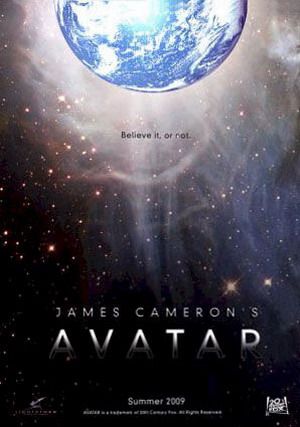
It made me think of Avatar, that film I didn't want to see and ended up seeing anyway. I found myself comparing the two films in several ways. There's the obvious storyline comparison, both of them being extremely archetypal hero-saves-strange-world myths (Avatar having been compared to everything from Dances With Wolves to Fern Gully). There's the strange-new-world-itself comparison. And then there's the actual physical (or "physical") enactment of that world -- Henson with puppets, Cameron with computers -- that I thought about the MOST.
I listened to the Fresh Air interview with James Cameron (twice), and watched the "making-of" documentary on The Dark Crystal, so I feel like I have some background on both, and the similarities continue. Both films created an entire ecosystem worth of plants, animals, and landscapes. Both ecosystems involved interesting combinations of plants and animals, blurring the lines between those distinctions. Both director/auteurs did way more research, development, and design of said ecosystem than anyone will ever see or notice. But I just can't get over the fact that, while James Cameron and his team achieved simply AMAZING effects with their creature design and their motion capture technology, Jim Henson also managed to achieve amazing effects, AND it was almost 30 years ago, AND everything he made is also tangible. Someone actually had to MAKE all that stuff.
Look at that world! (I think the end of this clip is part of what scared the crap out of me as a small child; I didn't remember much, but I remembered THAT part. ;o)
Yes, it's true -- someone also had to make all the stuff for Avatar, and create textures, and physically sculpt (there was probably some sculpting involved, right, digital artists?) and computer sculpt, and animate, and it probably took hours and hours and hours and hours. BUT again, I can't get over the fact that someone (several someones) built and operated all those amazing puppets, and actually had to, you know, deal with stuff falling off and breaking and getting wet and etc. They had to first design the world, and THEN figure out how to make it happen, within the realm of physical possibility. I mean, there are landscapes in The Dark Crystal, like the scenes by the riverbank, where they first had to conceive of what it should look like, and THEN go find things to make it out of -- whether it was sculpting rocks in certain formations, or finding real vegetation and altering it to give the effect they were looking for. They built this stuff with their HANDS.
I mean, look at these puppets. Just look at them.
And not only did they build this stuff with their hands, but they also had to animate them with their hands -- or legs or entire bodies, in most cases. Live for each take. And Henson and crew were already doing lots of complicated stuff with cable-controlled or radio-controlled puppet parts, so that there were a whole lot of people working on each creature. And this was only the early '80s; I remember watching shows on Henson's effects in the late '80s/early '90s, and there was already some motion-cap-to-live-computer-puppetry going on. I can't help thinking that if he hadn't died so early (stupid pneumonia!), he would have made some amazing innovations or even beaten Cameron to the extreme-motion-cap punch.
And the stories of both are rather silly anyway (sorry, Mr. Henson!), since it's the details that make the experience, in both cases. It's fun to compare the two: extreme hi-tech vs. extreme lo-tech (plus hi-tech-for-its-time).
JUST for those of you who might be thinking that I love every Bollywood movie I see . . . is this movie. Which, I have to say, was terrible. Boy oh boy. Mountain View Library! You have failed me in this!
Bas Ek Pal, 2006
Directed and Written by: Onir (why, Onir? Why? Wherefore hast thou wrought such a film?)
Produced by: Manohar P. Kanungo, Shailesh R. Singh
Starring: Juhi Chawla, Urmila Matondkar, Jimmy Shergill, Sanjay Suri, Rehaan Engineer, Yashpal Sharma
Do you see the photo at left? This is the cover under which I rented this film. Would you expect that in a film advertised with such an image -- look! Pink! dancing! smiling! happy-ness! -- most of the film would be concerned with domestic violence, prison rape, broken friendships and weird, creepy revenge?
No. I did not either.
The *concept* for the story is *sort* of interesting, if I tell it to you in words. (And since you're probably not going to watch it, or care if I spoil it, I will this time!) Bas Ek Pal means, cavalierly translated by me, "One Moment is Enough." Nikhil (Sanjay Suri) has returned to India from college in Boston, determined to settle back down to a hip Mumbai life -- though he's going through some culture shock. HowEVER, at a club, he meets a girl and becomes obsessed with her. She refused to tell him her name, so he starts repeatedly showing up there in hopes of meeting her again. The next time they meet, he's with friends and she's with a boyfriend -- a boyfriend with a GUN! Yelling! Fighting! And in one ill-timed split second: Shooting -- doh! Nikhil's best friend Rahul (Jimmy Shergill) is shot! From a gun that was in Nikhil's hand!
Nikhil, fresh from the USA, goes to horrible, developing-world jail. There are totally creepy dudes there. (Including an unexpectedly welcome creepy dude: Yashpal Sharma, playing "Swamy" -- he was a low-level bad guy in both Lagaan and Aaja Nachle. This is how weird the movie was -- I was happy to see a BADGUY I recognized.) No one will help poor Nikhil, including his relatives and the friends who were present at the shooting incident. Commence the languishing in prison and the working-out montages.
Fast-forward some large amount of time. He's out! He's free! He's got a badass goatee! But his friends don't want to see him anymore, the chick he was obsessed with--the dream that sustained him through his horrible prison sentence--is engaged to his sad now-paraplegic friend, and basically his life sucks.
So what does Nikhil do? Why, helplessly stalk her because he's got nothing left. Meanwhile Rahul blames him for his new disability, but he's secretly afraid the chick just pities him, not loves him. Creepy love-triangle things commence.
AND, their creepy alcoholic friend Steve (really, people? Steve?) is not only alcoholic but also an abuser -- and there are revealed some love-triangle things happening on THAT front, involving his wife.
Stalking! Attacking! Domestic violence! Blood! Murder! Boy, it really makes you think of two people dancing, doesn't it?
Now, this story on its own has the potential to be . . . at least an OKAY film, right? The idea of a guy taken straight from Boston to an Indian prison for a crime he didn't commit -- that has some pull, right? The idea that one ill-conceived moment can throw your life *radically* off course has SOME merit, right?
ExCEPT that this film managed to execute this story in the world's most shallow, creepy, unfeeling way possible. And the dream woman, the instant mystery, the comfort in times of sorrow -- she's played as the most plastic, languid, artificial, Barbie-tastic girl I've ever seen. Even her crying/whimpering/emotional sounds (there's a lot of crying in this movie) are afterdubbed -- DUBBED! as if she couldn't quite swing it on set -- and it STILL sounds horribly acted. Urmila Matondkar -- this was not the role for you.
This movie started out plastic and unaffecting and just got . . . weirder and weirder. Note to filmmakers: surprising suspenseful events close to the end of the movie, especially those involving guns and/or shooting people, should NOT make me laugh out loud.
Not one character was really likeable -- OK, the main character was pretty likeable in the beginning. And then he became a CREEPY STALKER. Why on earth anyone would fall immediately in love with the Barbie chick, let alone this guy, is pretty unfathomable. So then the irrationally passionate language he would use to describe her, coupled with the crazy desperate way he was spying on her, and her DUBBED CRYING, combine for a Gale-Force Weirdness from No-Sense Town. (And she appeared ickily older than he was, because she was so plastic -- it was like the world's youngest cougar.) Everything about the movie is slightly skeevy; the setting, the acting, the club, the music, the actors, the relationships, the dialogue, the people's names (STEVE?), the listless way they would drift through their lives and languidly betray and/or attempt to kill each other -- after the movie I was left feeling like I needed to take a shower. (And no, not in a good way.) Those creepy dudes from prison were like a breath of fresh AIR, next to the halfhearted main characters!
And, get this -- after this tirade of creepy, including betrayal, stalking, double-stalking, and bloody murder -- there's a HAPPY ENDING. I KNOW, right? What? From whence came you, o happy ending?
Yeesh. I can't even show you a clip because no one likes this film well enough to post it to YouTube. So let us all now, instead, think of rainbows. Rainbows!
See, I CAN hate a Bollywood film. So you really should see the ones I like, right? ;o)
The box claims it's "The greatest story ever told!" Shall we believe it?
Sholay, 1975
Directed by: Ramesh Sippy
Produced by: G.P. Sippy
Starring: Dharmendra, Amitabh Bachchan, Sanjeev Kumar, Hema Malini, Jaya Bhaduri, Amjad Khan, Asrani
It's Kinda Like: Butch Cassidy and the Sundance Kid meets The Seven Samurai . . . with hints of Paint Your Wagon (cowboy action heroes singing?) It's heavily influenced by Sergio Leone's spaghetti westerns, and apparently there are hints of Peckinpah as well. (This is in the genre of films referred to sometimes as "curry westerns." Ha ha.)
I gotta say, sometimes Bollywood film covers are really misleading. I've seen posters for Sholay often, and it looks like a crazy bloodthirsty epic blockbuster action film. I mean, look at it: Guns! Awesome dudes fighting! Grunting! Grimaces! . . . but then it had this song fairly early in it!
A partial translation of this song's lyrics is as follows, according to bollywoodlyrics.com:
We will not break this friendship I may break my strength, but I will not leave your side. Oh, my victory is your victory, your loss is my loss Listen, oh my friend Your pain is my pain, my life is your life That is how our love is.
Awwwwww!
Sholay is a pretty famous-slash-infamous film; released in 1975, its original run lasted for five years (ten? the internet disagrees with itself; confirmation not found in brief search) -- it was the highest-grossing Indian film to date and may still be,* and it was also the longest-running.** (You can see posters for Sholay in the background of Om Shanti Om, which I recognized, even though I'd never seen Sholay at that point. Just one more reason to see it!) It helped launch the career of the uberfamous Amitabh "The Big B" Bachchan (known to western audiences as the movie star idolized by the hero in Slumdog Millionaire), and Amjad Khan, and is generally referred to as a pop culture landmark.
Jai, the serious one (Amitabh) and Veeru, the funny one (Dharmendra) are our heroes, cheerful yet brave outlaws hired by an ex-cop (who had once arrested them) to carry out an important task. Thakur Baldev Singh (Sanjeev Kumar) needs their help to capture a notorious, psychotic bandit chief, Gabbar Singh (Amjad Khan), who commmitted a horrible crime against the Thakur and his family. (Sholay means "Embers," referring to the Thakur's slow-burning rage.)
Not knowing quite what to expect, not even the plotline -- I sincerely enjoyed it! It's truly a Western done by Bollywood, with very strong elements from both worlds. Some might argue that that makes it a weird, incongruous film -- but who cares about those people? ;o) Indeed, the film started out as a flop at the box office before its subsequent surge of audience, quite possibly because of its juxtaposed elements.
The Western stuff is really in-genre: the film's first big event is a train robbery, for example. And the film's style feels very modern and "artsy": the editing is creative and effective (and the shots aren't tooooo loooooooong, my big problem with 70s movies), and the stylistic choices of freezeframe and slow motion are taken from Leone and Peckinpah films. The score, too, is inspired by those spaghetti western scores, with non-musical sounds creating an affecting emotional soundscape (like in the flashback scene where Thakur relates what Gabbar Singh did: the creaky swing! Ouughhh, the creaky swing!).
But there's also some good old Bollywood comedy -- Bollywood films are long enough for two movies, after all -- it's a little like a spaghetti western meets a Hope/Crosby Road picture, for all the antics our heroes go through. They spend a very brief time in jail in the charge of a jailer who's doing Charlie Chaplin in The Little Dictator; they flirt with the local sassy chick; they exchange witty repartee; they flip a coin to make important decisions.
Yet the pendulum swings both ways. The comedy made me *actually* laugh, and it's sprinkled throughout the film, not sequestered in the first half. The water tower scene where a thwarted, drunken Veeru threatens to jump off is genuinely funny. (Have you ever heard someone in a movie who's threatening to commit suicide actually *yell* "Suuuuuuiiciiiiiiiiide!") And still, while remaining largely bloodless in that surreal slightly-comic classic film manner (how does one die from a gunshot that results in neither blood nor any visible wound?) the acting, the editing, and the sound design make Gabbar Singh's violent acts truly upsetting. (If you think children and animals are by definition safe, my friend, you are WRONG.) The film aims for both extremes -- and hits both targets.
Though influences from Leone's films are clear, the film felt a lot like Butch Cassidy and the Sundance Kid to me, complete with the sense of a smooth surface of comedy covering an ocean of dread. The heroes' interaction is genuinely warm and funny, and even their lazy banter is touching, especially when compared to the stark white widow and the frozen, glaring Thakur. Plus, the culture clash, like in Butch Cassidy, gives the film an extra kick of the surreal. Butch and Sundance travel from the US through New York City to a tiny village in Bolivia; it feels like two modern guys trapped in a nightmare of the past; the film is set in the early 1900s but their costumes (and that rockin' stache) definitely say sixties:
Compare with this photo of Jai and Veeru; similar, eh? Except in their case the culture clash is even more extreme: this movie is set in the PRESENT (1970s). Our heroes are dressed in a white leisure suit and jeans, respectively. They talk about driving cars. Some of the bad guys have machine guns. YET, the train robbery at the beginning is by bandits on horseback with rifles, and the Thakur's village is all dust and tribal clothing. Again, modern guys thrust into a timeless, basal, rural world.
Some Catty Film Criticism: The film looks so much like a Western that my roommate and I, both from Southern California, would have *sworn* it was filmed in the Mojave desert -- exCEPT that it was filmed near Bangalore. We can therefore no longer be cynical about movies filming in "clearly" cheap California locations -- maybe they really ARE in Tunisia! Also, wow, the buildings look so much like all those Spanish mission-style backlot towns where they stage cheesy gunfights -- sloping tiled roofs, low two-story buildings, guys getting shot and toppling off of balconies . . . talk about authentic Western. (And without giving anything away: though the *idea* of the final fight is Noble and Awesome, actually *watching* it is kinda high-larious. Good choice to have him leave the blanket on for most of the movie, I say.)
The Verdict: A classic film that's not just a historical curiosity, but also genuinely enjoyable! The genre blending is fascinating in how the different kinds of stories (revenge western vs. buddy film vs. romance) tie each other up; there's an ending for everyone.
* Apparently now there's a controversy about whether earnings from 3 Idiots have surpassed those of Sholay. Drama!
**(Sholay's record was eclipsed eventually by Dilwale Dulhania Le Jayenge, which opened in 1995 and was still running continuously as of Oct. 2009.)
The Mountain View library seems to have someone actually curating their Hindi movie collection . . . at least, all the ones I check out from there seem to have some extra social value . . . support your local library! This movie was not just an adorable comedy, it was also a look at the immigrant experience of community in a foreign country.
Salaam Namaste, 2005
Directed by: Siddharth Anand
Produced by: Aditya Chopra, Yash Chopra
Starring: Saif Ali Khan, Preity Zinta, Arshad Warsi, Tania Zaetta
It's Kinda Like: a brief "secret identity" movie becomes a "getting to know you for REALS" movie becomes a slapstick comedy. (ugh, apparently it's a partial remake of Nine Months? It has more of the flavor of Knocked Up.)
Like I said, this is a cheeky modern comedy -- but it's also a sideways look at the experience of the Indian diaspora. Sassy, huh? The characters are all Indian expats living in Melbourne -- and interestingly, none of the plotline involves coming from India, going to India, or characters who live in India. We don't meet anyone's parents, children, or siblings. Everyone is on their own in Melbourne living a new life. We find out in brief narrated slideshows what brought each character there, and it's different for everyone -- it's also not always brought up again, which is a fun twist. We catch a glimpse into someone's backstory, and then that's all we hear about it; it serves to color our experience of that character rather than to advance the plot. (Color, not advance -- I love it!)
What holds this community together, then, if not families? Why, the radio! The film's title comes from the radio station and morning show where the main character Ambar (Preity Zinta) works. Her show involves interviewing Melbourne's successful Indian businesspeople, in order to inspire the community in general. As the film opens, we see her on the radio, and we see her listeners, too, in their own environments, performing mostly solitary activities: bagging groceries, doing the housework, exercising with headphones, cutting hair in a salon. As she speaks, we see them all react, as though they're together -- even though they're all, separately, alone.
(It was interesting to watch this movie since I sometimes listen to the local Indian AM station, which is lots of fun. The call-in portion of any show is really important, and they have shows for all kinds of things: wanna sell your car? get advice from a dentist? share health tips? discuss your investments? Plus they play Bollywood music new and old. It's a fascinating cultural experience: for interested parties in the Bay Area, it's KLOK 1170AM.)
Against this backdrop of the big-yet-small town, our heroine meets (or rather, doesn't meet) our hero: Nick, aka Nikhil Arora (Saif Ali Khan). While Ambar is precise and exacting--she's studying to be a surgeon, after all--Nick is an easygoing chef. We can tell what he thinks of himself, from the obvious touches -- get your tickets to the freezeframe gun show! -- check those Superman boxers and the bright red car! -- to the slightly-less-obvious: he's listening to a song from Dhoom (often-referenced action-movie franchise) in the car.
They *don't* meet in the sense that, because of his problems with getting up on time, he misses his radio interview, causing her to spew vitriol over the airwaves for days, trying to ruin his reputation. (Of course, the restaurant he cooks for is called "Nick of Time." Ha ha.) They have several entertaining yelling matches over the phone about this, causing apoplexies for both their bosses but hilarity for Nick and his friend -- and glee for radio listeners everywhere.
The tagline for the movie is "Let's get to know each other," which happens in two ways, in the way that many Bollywood movies contain both the film and its own sequel. The first "film" is the type of romantic comedy with "dual identities," a la You've Got Mail (sorry Meg Ryan haters, it's the only one I could think of in the moment): the main characters hate each other in one context, and fall in love as strangers in another.
Like the more modern-y films, lots of Salaam Namaste's songs serve as voiceover instead of dance music -- but here's one number where they actually dance (not genius choreography). Our stars have met for what they *think* is the first time, and you'll also see Nick's comic-relief friend Ron (Arshad Warsi), a guy who's only recently discovered women, and is desperately terrible at figuring them out (the first time we meet him, he's chatting up what we can all see is a hooker -- why a hooker would be in the suburbs is another question altogether). And in this clip they're all at an event featured in lots of Bollywood movies as an excuse to get people together: a wedding. Cause, in Australia, doesn't every wedding end in ripping off your clothes and running into the water?
Their hidden identities are revealed pretty fast, and then we get to the *real* plot of the film, the Racy Part. I'll let the adorable stars themselves explain. This gives you an idea of the film's feel and comedy style (this film even has bloopers in the credits, which seems *totally* American-comedy to me).
Aren't they cute? Yes, that's right -- they said "living together." They've fallen in sort-of love, and Nick urges that they should live together -- in separate rooms, of course. Then the getting-to-know-you proceeds apace. Something I've touted about Bollywood before: they have enough screen and story time to show you the roundness of their characters. Nick may have trouble waking up in the morning, but he's no slouch: he's an exacting cook and a neat freak. Ambar's the messy one, though a good decorator; she does, though, have a tendency to yell at him kind of a lot. We see the good times AND the bad, and they're not just comedy-bad, but upsetting-bad.
Because -- scandal! Not only is there *onscreen kissing* in this movie, BUT what you might expect of the logical results of living together. If it's a movie, at least. See if you can figure out what that is:
Scandal! And no, they are NOT married in the above clip. Scandal!
Because they're miles away from their parents, all the characters have to figure out what's going on, as it were, for themselves. A disparate community, all in Melbourne for different reasons, they have to support themselves and each other. They have to be their own family, or make new ones out of the people around them. That also means they have to get to know each other as individuals; they can't be thrown together by the social family structure, they have to find each other in the city and make the effort. Because the concept of Tradition doesn't really play into this film, on the surface at least; it's a modern story in a modern city, about people figuring out how to be modern.
The reasons for moving to Melbourne, revealed in the lightning-flash narrations (voice -- and cameo slapstick -- provided by Abhishek Bachchan!) are a fascinating range of types, from all places in India, from all walks of life, for all reasons. There are those who came in order to consciously forge a new path, following their dreams. We have Ambar, who came on a one-year student exchange program and decided to stay, escaping any number of arranged marriages. We have Nick, who came to go to architecture school as his dad wanted, and ended up following his dream to be a chef. We have Ambar's fellow med student Jignesh (played by Jugal Hansraj), who's a terrible student but just wanted to escape being a sari salesman all his life.
Then there are those characters who are more swept along by the winds of fate: they've changed locations, but their basic personality continues on. There's Nick's restauranteur boss, who went from being a small-scale glutton in India to a large-scale one in Melbourne: new job, character essentially unchanged. There's Ambar's boss, loud-voiced drama queen and chronic hummer, who just wants someone to ask him to sing on the radio. And my personal comedy-relief favorite: Nick and Ambar's landlord (Jaaved Jaffrey), a once-poor, shiftess nobody who won the lottery and has OVERassimilated into Australian society, while remaining essentially the same dirtbag he ever was. "I WAS Indian. WAS," he says. "NOW I'm Australian." Food for thought, eh? ;o) Here's part of his award-winning comic performance:
(Jeez, he looks like a tan Dave Gardner. Who is probably no one you know. But dude, it totally looks like him. Especially with the sideburns. Just sayin'.)
This movie, I must confess, actually made me laugh to the point that I almost sprayed my laptop with my beverage. The side characters are really well done: sometimes clownishly exaggerated, but with committed acting that doesn't feel too over-the-top "winky." They believe themselves. And they're well-balanced by our heroes' self-determined "normality." We're all just trying to live our lives, right? We're all normal to ourselves . . .
The Verdict: A fresh-feeling comedy, with appealing stars, good acting, hilarious side characters, and a hint of modern social dilemma. Me likee!
 I love reading to kids (if my job consisted entirely of reading stories to children all day long, I'd be the happiest person on earth) so I would bring in some of MY favorite books to read to them, and towards the end of my volunteering time, I brought in the book pictured at left: The Day I Swapped My Dad for Two Goldfish -- words by Neil Gaiman, pictures by Dave McKean. (It's delightful -- here's a preview and some more info.) One little girl piped up, "Hey, I know that book! He's my godfather!"
 Now, I may be tooootally behind the times here -- Understanding Comics came out in 1993, and I've only just read it now. BUT, I highly recommend it -- to anyone who's interested at ALL in art, storytelling, or the art of storytelling.